
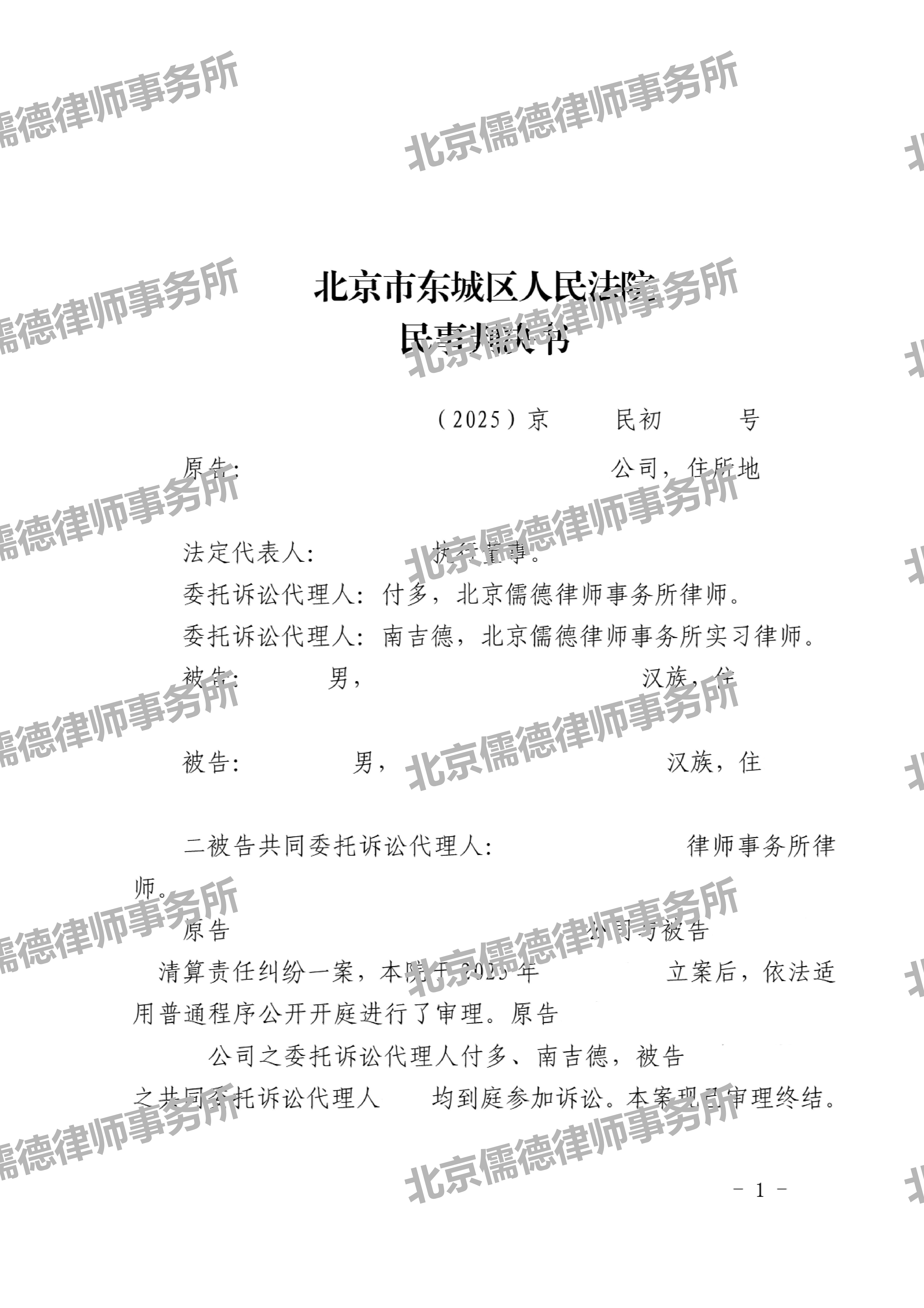
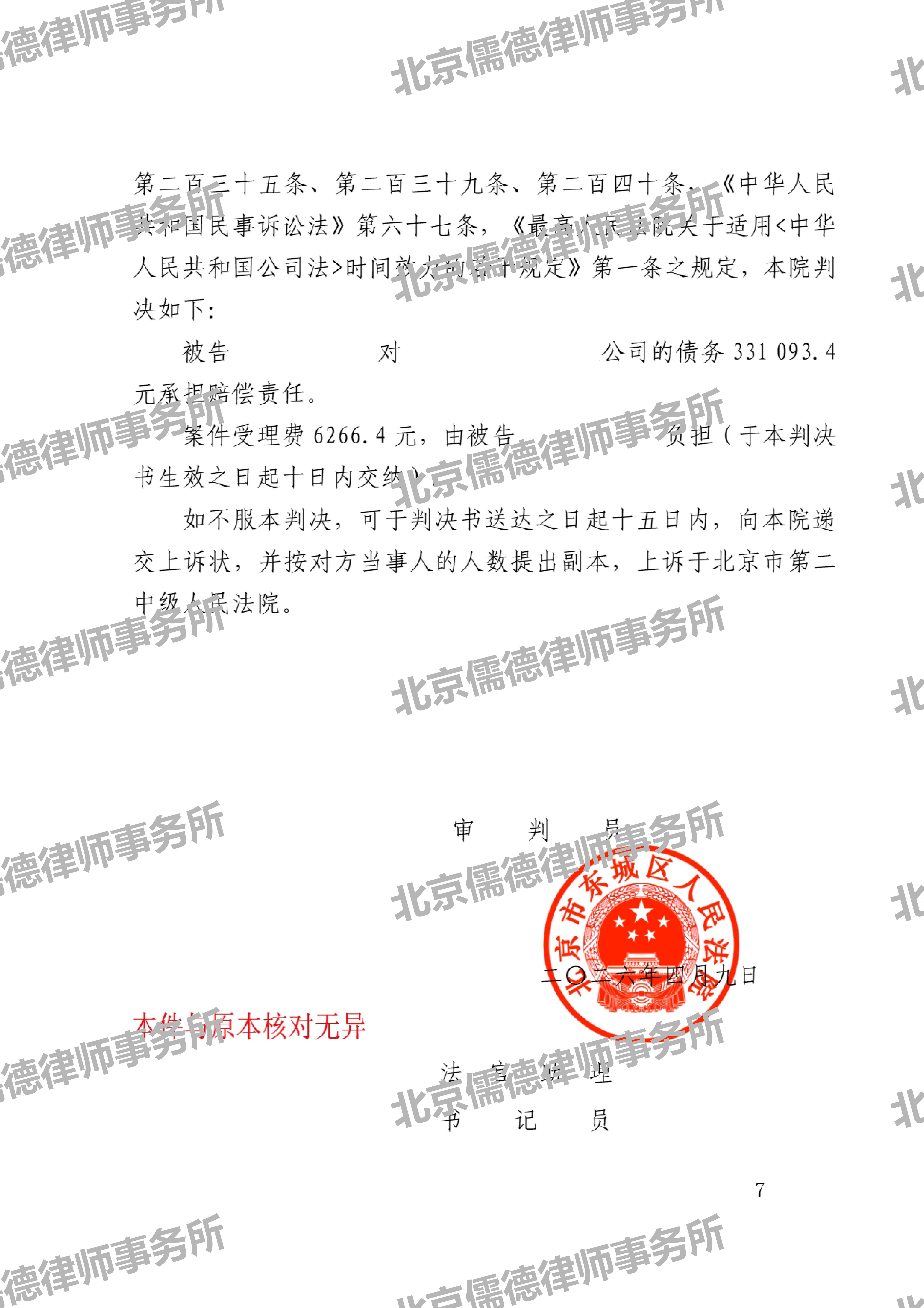
This case is a typical dispute over liquidation liability arising from the deregistration of a company without lawful liquidation. Plaintiff Company A and Defendant Cpany B had a creditor-debtor relationship arising from a decoration contract, which was confirmed by an effective court judgment. After offsetting the debts, Company B was ordered to payCompany A 331,093.4 yuan. After the judgment took effect, Company B failed to fulfill its payment obligation. Company A applied for enforcement, but the court lally ruled to terminate the current enforcement procedure due to Company B having no assets available for execution. Subsequently, Shareholders Jia and Yi of Company B, knowing that the company stilunpaid debts, failed to fulfill their liquidation obligations and failed to notify known creditors. They proceeded with a simplified deregistration on the grounds that the company had "no creditor-debtor rionships and had completed liquidation," and signed the "Commitment Letter of All Investors for Simplified Deregistration." This resulted in Company A's claim becoming completely unable, facing a significant loss of over 330,000 yuan that cannot be recovered. To safeguard its legitimate rights and interests, Company A entrusted lawyers from Ru Law Firm to initiate a liquidation liability lawsuit, demanding that the former shareholders bear liability for compensation regarding the debt in question.

Fu Duo, a lawyer who graduated from the Law School of Heilongjiang University, passed the National Unified Legal
Professional Qualification Examination with high scores, sing a solid foundation in legal theory and extensive
experience in legal practice. Since commencing practice, he has specialized in civil and commercial litigation, excelling
in areas such as contract disputes, coregal counsel, labor disputes, and tort liability disputes.
She has independently handled numerous litigation cases, exercising full control from case analysis and document
drafting to courtroom argumentation to precisely safeguare rights and interests of clients. Additionally, he provides
legal services to enterprises, including contract review, risk prevention, and compliance management, assisting them in
operating in a standardized manner.professional attitude of rigor, meticulousness, diligence, and dedication, he is adept at listening to needs and accurately grasping legal points, earning widespread recognition from clients through
professional and efficent service. He strictly adheres to legal professional ethics and is committed to securing the
maximum legitimate rights and interests for clients within the framework.

Lawyer Nan Jide passed the National Unified Legal Professional Qualification Examination with high scores. Currently serving as a trainee lawyer, he specializes in civil and commercial litigation, labor disputes, contract review, and legal advisory services. Possessing a solid legal foundation and strong writing skills, he is familiar with case procedures, evidence organization, and legal research. He works rigorously and responsibly with a keen eye for detail, strictly adhering to professional standards to safeguard the legitimate rights and interests of clients through professional service.
Company A entrusted Lawyers Fu Duo and Nan Jide to form a case team to represent this case. Upon accepting the case, the two lawyers immediately comely reviewed the evidence materials, including: effective civil judgments, enforcement rulings, industrial and commercial archives, simplified deregistration announcements, and commitment letters from all investors. After detailed analysie legal team confirmed the core legal points of the case: 1. Before its deregistration, Company B was aware that Company A was a known creditor but failed to notify them duct a legal liquidation before deregistering, thereby violating statutory liquidation obligations. 2. The shareholders signed false commitment letters to process the simplified deregistration and are legally liable for compensatiegarding the company's debts. 3. The termination of the enforcement procedure does not equate to the company's permanent inability to pay; the failure to conduct a legal liquidat resulted in the inability to realize the creditor's rights, and there is a direct causal relationship between the shareholders' actions and the resulting loss.
In response, the legal team formulated a litigation strategy: filing the case under the cause of action of liquidation liability dispute, establishing the three key facts ofre to notify creditors, failure to liquidate in accordance with the law, and false representations," and requesting the court to order the shareholders to bear full liability for compensation for te debt of 331,093.4 yuan, making every effort to recover all losses for the client.
The two attorneys precisely established key facts, powerfully refuted the defenses, and clearly expounded the legal basis, thereby facilitating the efficient resolution of thee. Under the professional representation of the legal team, the court fully accepted our claims; the facts were clearly determined, the law was accurately applied, and the dispute was substantially resolved throughent, thereby avoiding the parties from being trapped in a prolonged enforcement predicament.
1.Company deregistration must be conducted in accordance with the law through liquidation. Before dissolution and deregistration, the company must fulfill its liquidation obligations in accordawith the law, notify known creditors, and publish an announcement; it is prohibited to deregister through a simplified procedure or make false commitments to evade debts.
2.The obligation of shareholders to liquidate cannot be waived. If shareholders and directors, as liquidation duty holders, fail to fulfill their notification and liquidation obligations in accordance with the law, resulting in losses to creditors, they shall bear liability for compensation; the fulfillment of capital contribution obligations does not equate to the exemption of liquidation liability.
3.The termination of execution proceedings does not equate to the extinction of the creditor's rights. The debtor having no assets available for execution and the court terminating the proceedings does not mean the claim becomes invalid. Creditors may timely investigate whether shareholders or actual controllers have withdrawn capital or engaged in illegal deregistration, and hold them legally liable.
4.Business entities should retain complete evidence. Transaction contracts, judgments, enforcement documents, business archives, and communication records are all key evidence; proper preservation ensures a proactosition when upholding rights.
5.In the event of unsecured claims, promptly engage a professional lawyer. When claims cannot be realized after company deregistration, you should immediately engage a lawyer to verify legality of the liquidation process, timely initiate liquidation liability litigation, hold dishonest shareholders accountable, and minimize losses to the greatest extent possible.