
I. Brief introduction to the case
On September 8, 2018, Party A joined Company B and worked in civil engineering. To avoid employment responsibilities, the company signed a "Labor Employment Agreement" with Party A, providing a fixed monthly salary and implementing unified attendance management. This effectively established a labor relationship between the two parties. In January 2025, the company notified Party A of his dismissal and both parties signed a "Labor Relationship Termination Agreement", agreeing that the company would pay a lump sum of 10,400 yuan, covering all expenses such as labor fees, compensation, indemnities, and welfare allowances. All rights and obligations of both parties were settled once and for all, and Party A was not allowed to claim any further labor rights and interests. After the payment was completed, Party A initiated arbitration separately, requesting confirmation of the existence of a labor relationship from September 8, 2018, to January 23, 2025.
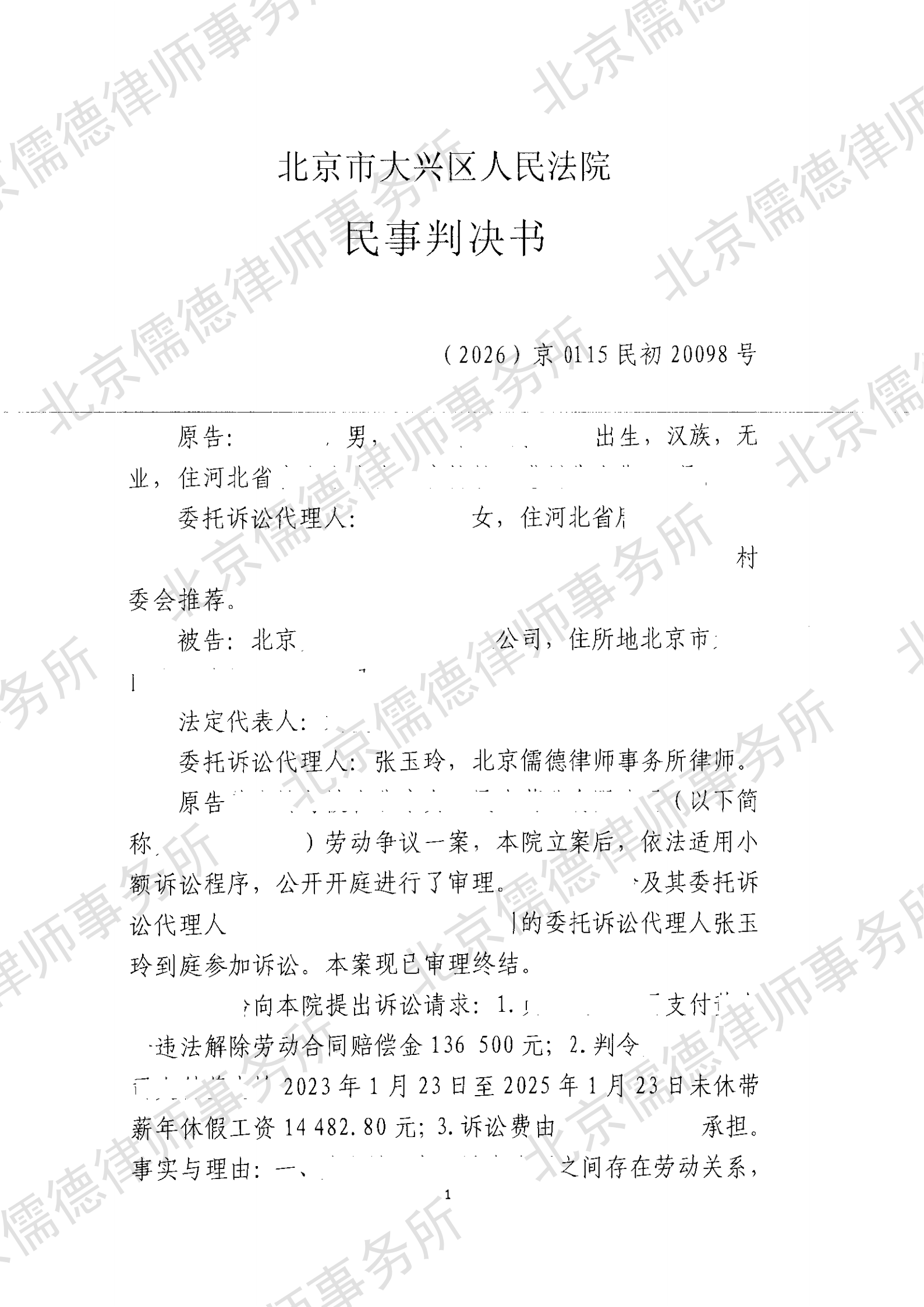
After trial, the final judgment confirmed the existence of a labor relationship between the two parties. After receiving the effective judgment, Party A filed for arbitration again, claiming that the company illegally terminated the labor contract and demanding a double compensation of 136,500 yuan for 6.5 months of work experience and 14,482.8 yuan for unused annual leave from 2023 to 2025. The arbitration committee rejected all of his claims, and Party A appealed to the People's Court of Daxing District, Beijing, against the ruling.
Claimant A alleges that the company has owed him wages for 5 months and coerced him into signing a termination agreement by refusing to pay his salary, which constitutes fraud and coercion, and therefore the agreement should be invalid. The company selectively dismissed only him, while the rest of his colleagues remained on the job normally, which constitutes an unreasonable and illegal dismissal. Furthermore, during his employment, he was never given any annual leave.
II. Lawyer intervention

Lawyer Zhang Yuling, a graduate student of law at Hunan University of Technology, has passed the national unified legal professional qualification examination. She possesses a solid foundation in law and is familiar with the case handling process. Passionate about the legal profession, she is meticulous and diligent in her work, with a strong sense of responsibility and a team spirit. She has a good sense of service and has accumulated rich experience in case handling during her apprenticeship under lawyers. She strives to safeguard the legitimate rights and interests of her clients in every case.
III. Handling process
Attorney Zhang Yuling promptly obtained a full set of evidence: the "Agreement on Termination of Employment Relationship" stamped with the official seal and signed personally by Party A, complete bank transfer records of the lump sum payment of 10,400 yuan, and resignation handover records, fully reconstructing the entire process of mutual negotiation for termination and settlement of accounts. In response to the bank statements and WeChat chat records submitted by Party A, the attorney prepared cross-examination opinions one by one, pointing out that the bank statements could only prove the salary payment cycle and could not confirm "using arrears of wages as a threat to sign the contract"; the authenticity of the WeChat chat records was questionable and could not prove that the company had engaged in illegal layoffs.
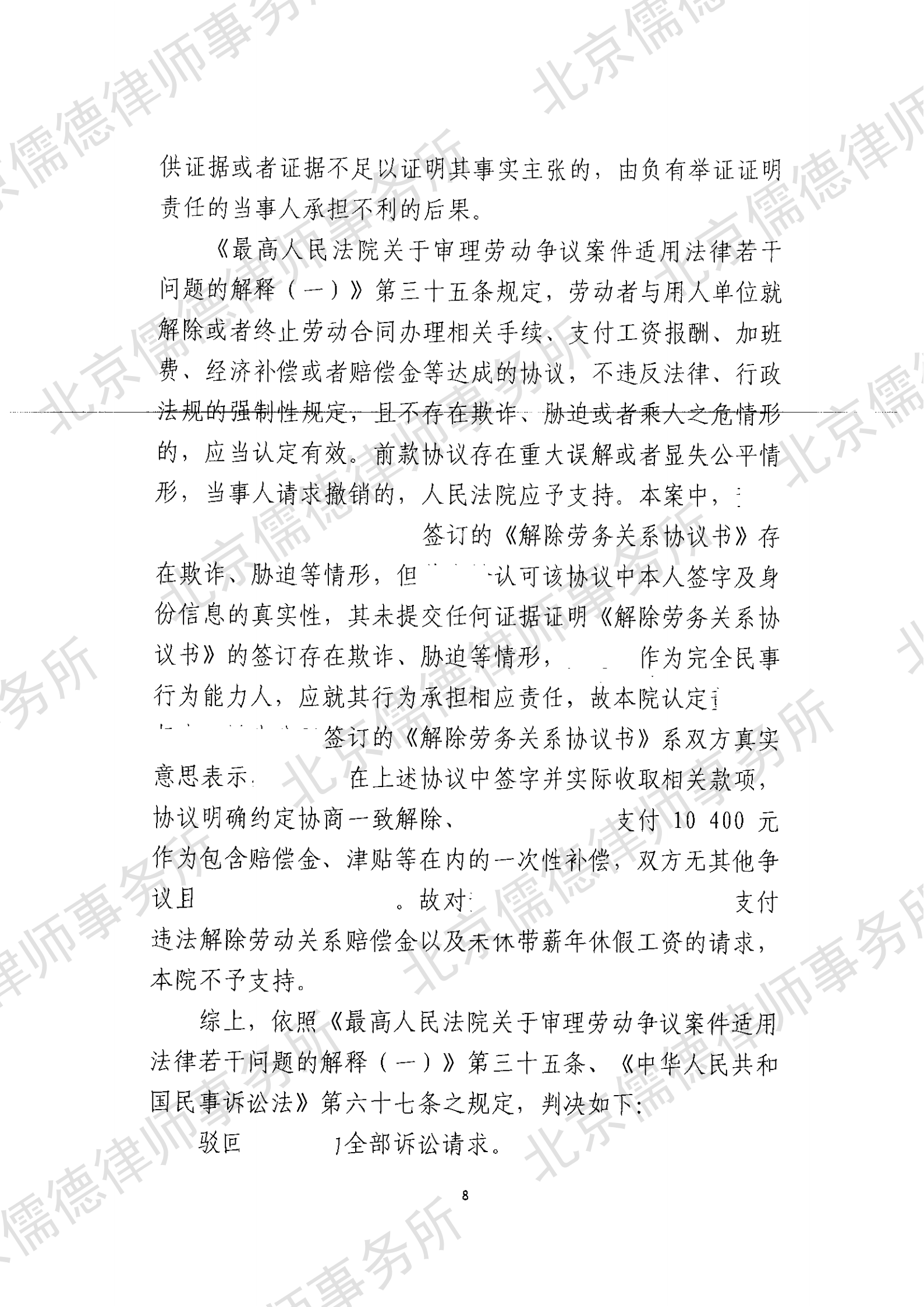
The lawyer quoted Article 35 of the "Interpretation of the Supreme People's Court on Several Issues Concerning the Application of Law in the Trial of Labor Dispute Cases (I)", which clarifies that settlement agreements reached between employers and employees on issues such as severance compensation, wages, and annual leave are legal and valid provided that there is no fraud, coercion, or exploitation of the employee's vulnerability; if the employee claims that the agreement was coerced or manifestly unfair, they must provide sufficient evidence to support their claim, otherwise they will bear the burden of proof. At the same time, the lawyer explained to the court that although the agreement is named a labor agreement, its terms cover all labor rights and interests such as economic compensation, damages, and welfare allowances. Even if the actual relationship between the two parties is labor-related, these settlement terms still have binding force.
During the trial, lawyer Zhang Yuling focused on three core defenses: First, as a person with full civil capacity, Party A was fully aware of the legal consequences of signing the agreement, which stipulated "the one-time settlement of all disputes and the waiver of subsequent recourse rights"; second, there was no direct evidence to support the employee's claims of coercion and fraud, and unilateral statements alone could not overturn the validity of the written agreement; third, the lump-sum payment agreed upon in the agreement had already included all labor benefits such as unused annual leave and severance compensation, and Party A's repeated claims for compensation after receiving the payment violated the principle of good faith.
IV. Case Outcome
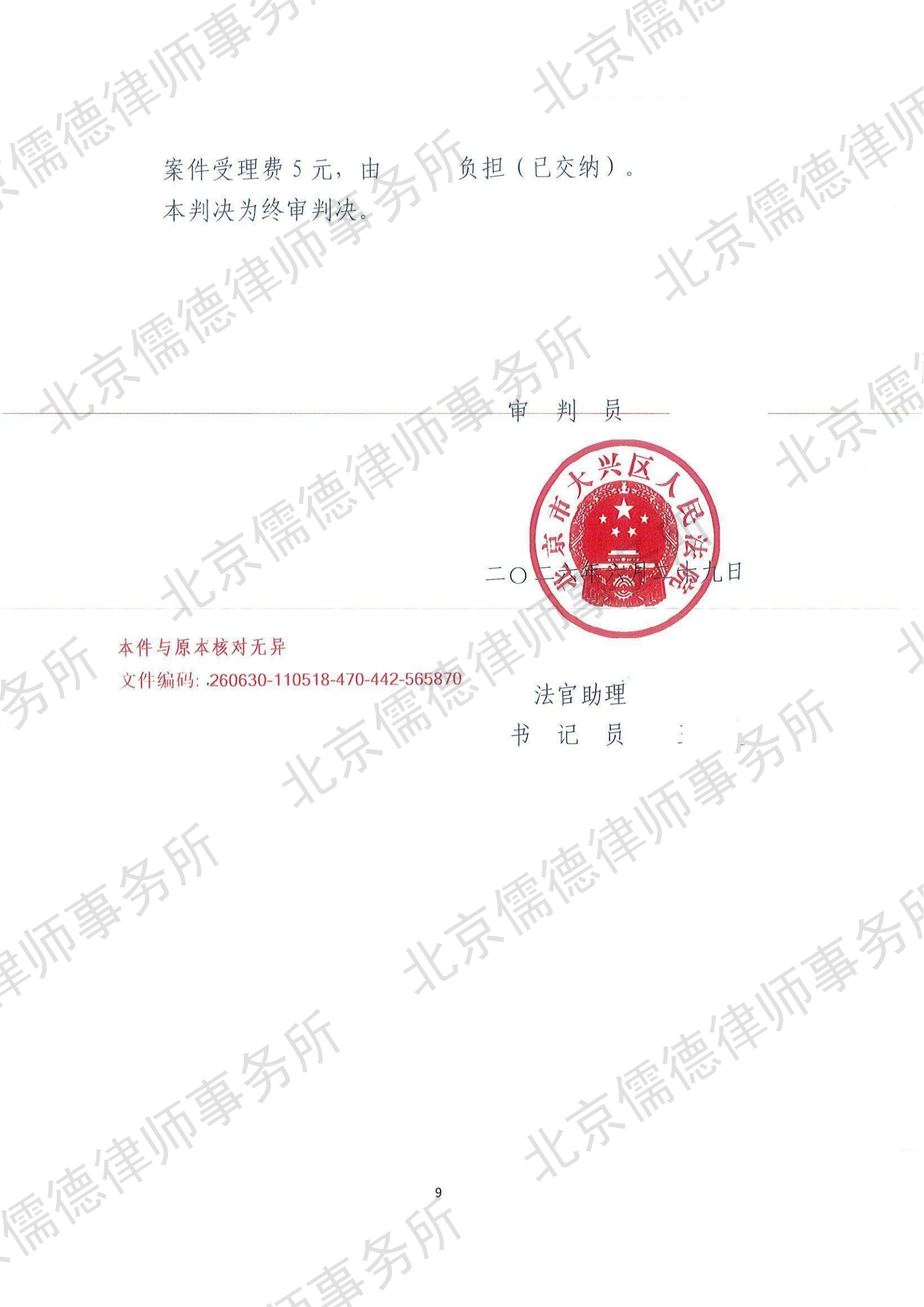
The People's Court of Daxing District, Beijing, adopted all the opinions presented by Rude Law Firm as representation, and ruled to reject all of Party A's claims, with the case acceptance fee to be borne by Party A.
Key points of the court judgment: Party A failed to provide evidence to prove the existence of fraud or duress at the time of signing the agreement. The termination agreement involved in the case reflects the true intention of both parties and is legal and valid. The labor dispute between the two parties has been settled once and for all, and neither party has the right to claim compensation for illegal termination or unpaid annual leave salary.
V. Lawyer's Reminder
1. Tips for enterprise employment
When negotiating the termination of labor relations with employees, enterprises should sign a written settlement agreement that clearly stipulates that the compensation includes all labor rights and benefits such as wages, overtime pay, annual leave, economic compensation, and damages, and specifies that "both parties have no other labor disputes";
Keep transfer vouchers, handover records, and relevant supporting evidence from the signing site to reduce the risk of subsequent litigation. Do not use "labor agreements" to circumvent legal responsibilities related to labor relations. The nature of employment should be determined based on actual management and salary payment facts.
2. Tips for workers to safeguard their rights
Before signing the resignation settlement agreement, it is imperative to thoroughly read all the terms. If you encounter any coercion or fraud in the signing process, such as wage arrears, you must immediately retain complete evidence such as audio recordings, chat records, and written communication vouchers. If you only claim coercion orally without objective evidence, it will be difficult for the court to believe you.
After signing the agreement and receiving the full payment, if there is no sufficient evidence to overturn the validity of the agreement, it will be difficult to obtain judicial support for claiming additional compensation.