
Case Brief
The chemical company is a wholly-owned subsidiary of the German K Group, holding the registered trademarks "Wacker" and "Wacker". It has been engaged in the long-term operation of chemical building materials products such as silicone sealants and foam adhesives. After years of market promotion, the "Wacker" brand name, trademark, and green yellow layered characteristic product packaging and decoration have gained high popularity and stable market share in the sealant industry. It has won authoritative awards in the industry multiple times and has consistently ranked among the top sellers of building materials and auxiliary materials both online and offline.
At the end of 2025, investigators from Party A found evidence in the Fuzhou building materials market that Guangzhou Co., Ltd. and Shandong Science and Technology Co., Ltd. were responsible for producing DA foam adhesive and SN kitchen and bathroom anti mold sealant, while offline stores of Xinyuan Building Materials Store and Jin'an District Building Materials Store in Fuzhou City were selling the above products simultaneously. The Guangzhou company will be registered and established in 2023, directly registering "Wacker" as the company name, with its business scope completely overlapping with that of the plaintiff; It registered the "x" trademark on its own, and the product packaging completely copied the plaintiff's green and yellow color scheme, scene diagram, text layout, German technical logo and other complete decoration designs. The overall visual height is highly similar, which easily causes confusion for consumers. The four defendants divided their work to complete the entire chain of brand counterfeiting, OEM production, and offline distribution infringement, deliberately colluding with the reputation of the Wacker brand for profit.
The chemical company filed a lawsuit with the Gulou District People's Court in Fuzhou, requesting the four defendants to stop trademark infringement, stop imitation packaging decoration, rename the Guangzhou company, and compensate for economic losses and reasonable expenses for rights protection in sections, totaling 330000 yuan.
Lawyer intervention

Yi Dongdong, a Party member and partner lawyer at Beijing Rude Law Firm, serves as the Director of the Intellectual Property Department. Specializing in litigation and non-litigation services within intellectual property and corporate legal advisory fields, he is dedicated to providing enterprises with integrated solutions for trademark, patent, and copyright rights confirmation, protection, and operational transformation. Adhering to the principles of fairness and integrity, he strives to maximize the realization of clients' legitimate rights and interests.
Areas of Expertise: Labor disputes, legal counsel, trademark rights, patent rights, copyright, business consulting
Classic Cases: Zhongde Xingda Company's Application for Reconsideration, and the Administrative Dispute Over the Golden Seed Liquor Trademark Involving a Listed Company
Case handling process
1. Pre court evidence exchange: Lawyer Yi cross examined the plaintiff's reputation evidence, notarized evidence materials, and product decoration comparison pictures one by one, pointing out that the plaintiff's sales data and award certificates cannot directly prove that the decoration involved in the case meets the standard of "having a certain impact"; Notarization and evidence collection can only prove the fact of sales, but cannot prove the defendant's intention to confuse. At the same time, the defendant's trademark registration certificate and the China National Intellectual Property Administration's decision to approve the registration shall be submitted to prove that the use of the logo has a legitimate right basis.
2. Focus of the trial: Confrontation Focus 1: Whether trademark infringement is established. Lawyer Yi focused on isolating and comparing the trademarks of both parties, demonstrating the visual differences between the two from multiple perspectives such as letter count, arrangement, and word meaning. He argued that the defendant's own registered trademark was legally used and did not constitute trademark similarity. This defense was fully adopted by the court, rejecting all trademark infringement claims of the plaintiff. Focus 2: Does the company name and imitation packaging decoration constitute unfair competition. Lawyer Yi argues that the plaintiff cannot prove that the "Wacker" brand has a unique correspondence, and that slight differences in packaging are sufficient to distinguish the source of the goods; The seller holds complete purchase documents, which are legitimate sources. The court acknowledges the overall visual similarity of the packaging and the adherence of the font, but adopts Lawyer Yi's defense viewpoint on distinguishing the fault of the subject and reducing the amount of compensation. Focus three: Determination of compensation amount. The plaintiff claims a high compensation of a total of 330000 yuan. Lawyer Yi, based on the defendant's business scale, duration of infringement, product price, sales quantity, and the fact that the plaintiff has not provided evidence of actual losses, advocates that the statutory compensation should be significantly reduced, distinguishing between the responsibilities of different entities such as commissioned production, OEM processing, and terminal retail, and setting separate compensation ranges.
3. Debate on Responsibility Allocation: Lawyer Yi clearly distinguished the division of labor among multiple defendants: the Guangzhou company is the brand owner and packaging designer, and bears the main responsibility; Juhuan Company only provides OEM services and assumes joint and several obligations only for foam products; The two building materials stores only retail and have meager profits, so the compensation amount should be significantly reduced to fully realize the division of responsibility defense.
case outcome
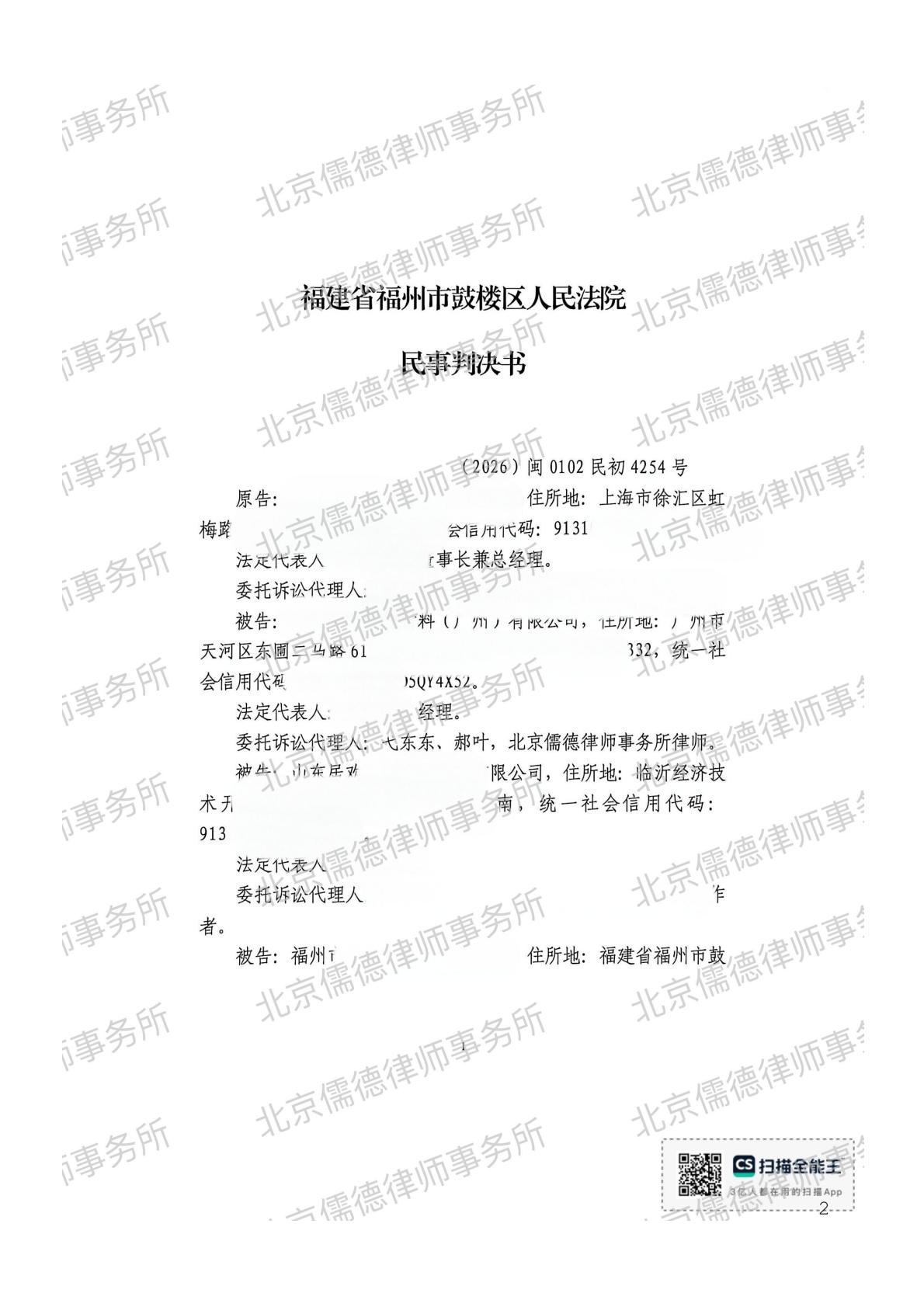
The People's Court of Gulou District, Fuzhou City has made a civil judgment (2026) Min 0102 Min Chu No. 4254, with the core judgment result being:
1.Reject all trademark infringement claims of the plaintiff and acknowledge the non infringement defense of Lawyer Yi's trademark;
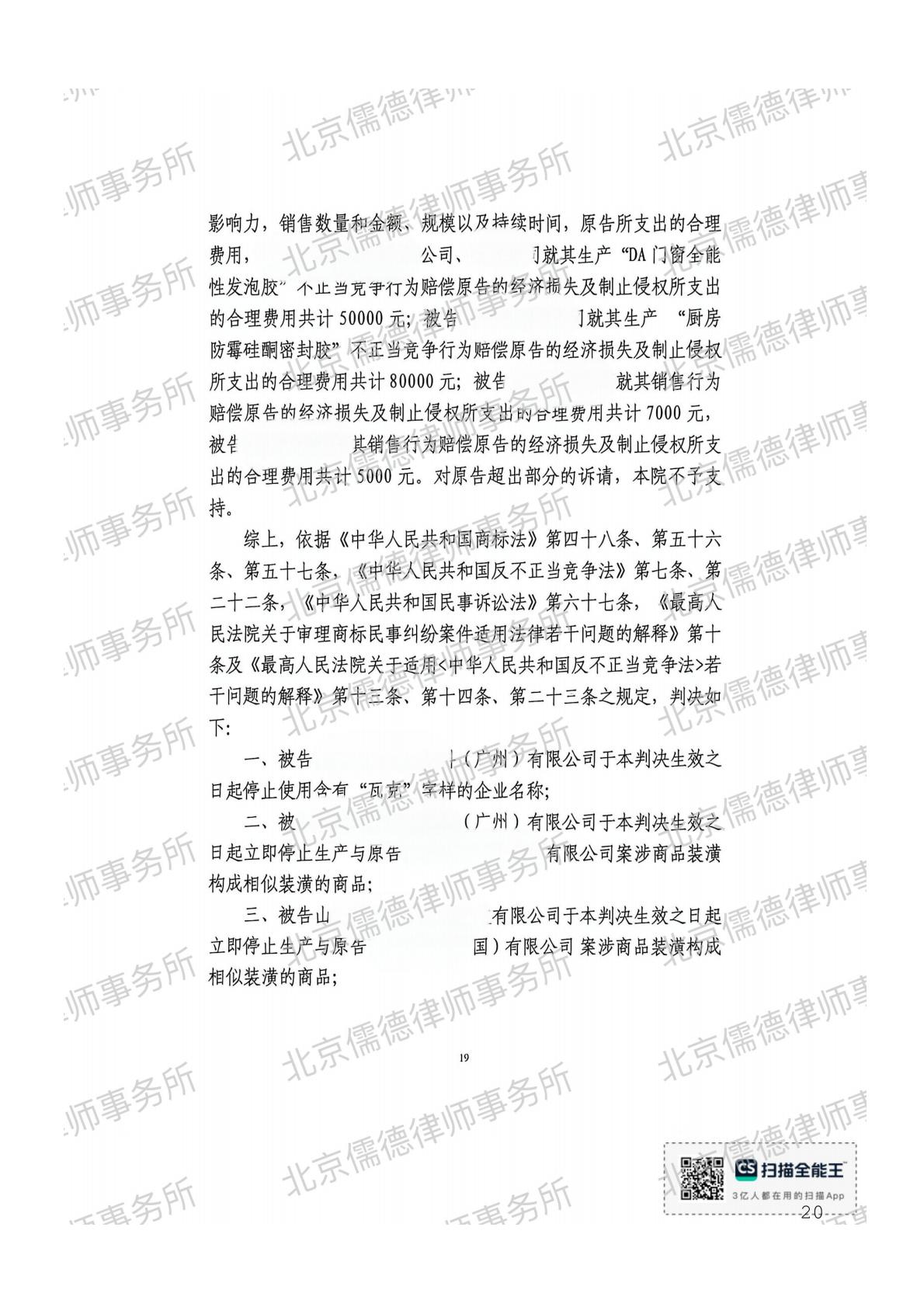
2. It is determined that the use of the "Wacker" brand by the Guangzhou company and the use of similar packaging decoration by the four defendants constitute unfair competition, and all defendants are ordered to stop producing and selling similar decoration products. The Guangzhou company is required to change its corporate name within a specified period of time and delete the word "Wacker";
3. Significantly reduce the total amount of compensation requested in the original lawsuit, and only order each defendant to compensate a total of 92000 yuan in segments: Guangzhou Company shall compensate 80000 yuan for the infringement loss of sealant alone, jointly compensate 50000 yuan for the infringement loss of foam adhesive with Juhuan Company, and two building materials stores shall compensate 7000 yuan and 5000 yuan respectively; The original request is to reject all excess amounts of 330000 yuan;
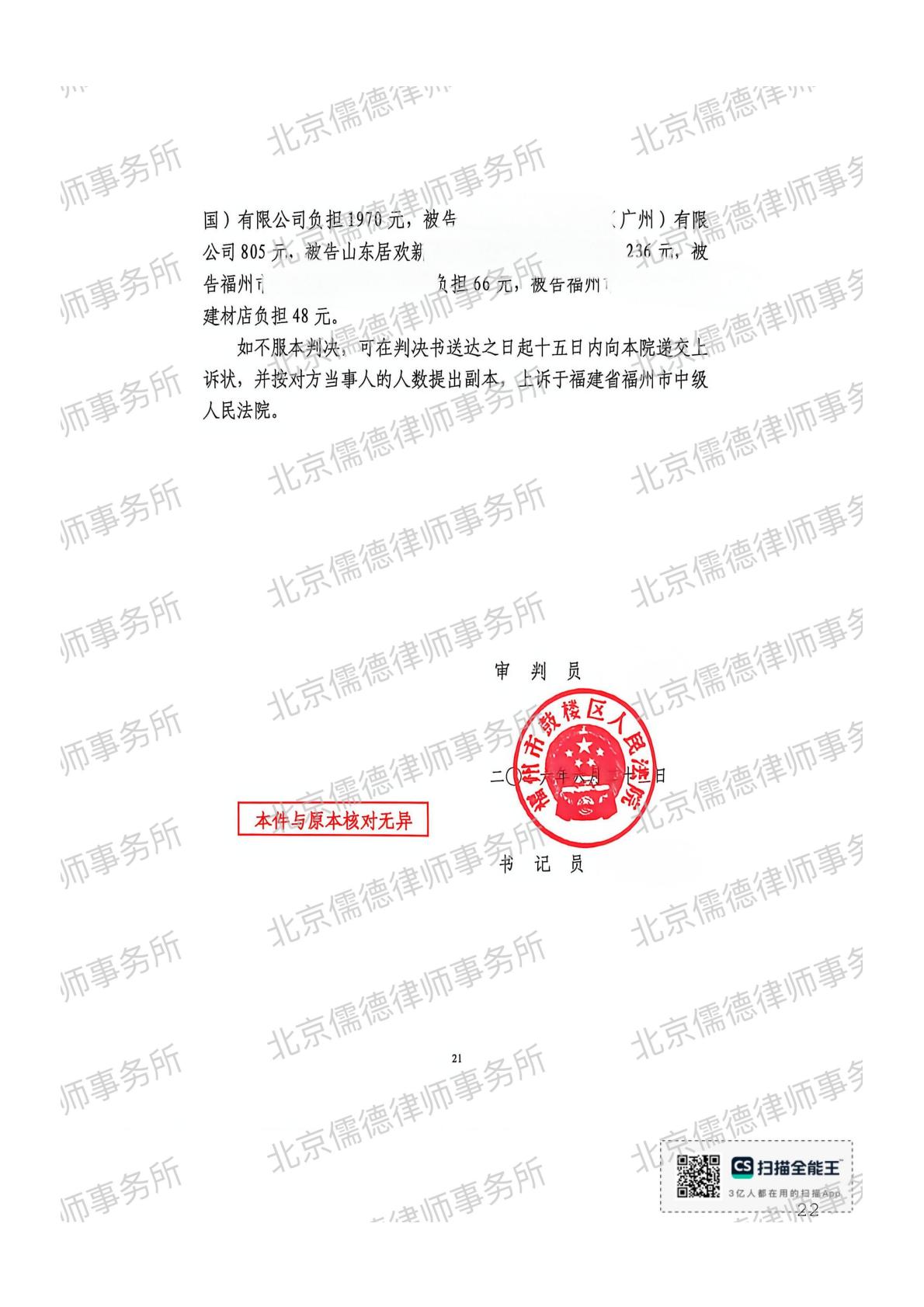
4. The case acceptance fee is 3125 yuan, most of which is borne by the plaintiff, significantly reducing the litigation costs of each defendant.
Lawyer Reminder (Beijing Rude Law Firm)
1. Holding a registered trademark ≠ arbitrary use: Even if a company obtains a trademark registration certificate, if it deliberately imitates the packaging and decoration of top industry brands and registers the same name, it will still constitute unfair competition. Legitimacy of trademarks can only counter accusations of trademark infringement and cannot avoid legal liability for "free riding" confusion.
2. There is a clear distinction between the responsibilities of production, OEM, and sales entities: OEM processing enterprises only accept commissioned production, do not participate in packaging design, and do not register brand names, and can claim to reduce fault liability; Offline retailers can provide complete sources of purchase and authorization documents, which can significantly reduce the amount of compensation. In the process of safeguarding their rights, they should timely submit legal source evidence such as purchase vouchers.
3. When registering a company name, it is necessary to fulfill the obligation of avoidance: when the first brand trademark and name have industry recognition, the subsequent establishment of a same industry enterprise cannot register the same or similar name. The court may order the enterprise to change its name, and must not hold the misconception that "industrial and commercial registration is legal".
4. Intellectual property rights protection claims require complete evidence: if the brand claims high compensation, it must submit complete evidence of actual losses, infringement profits, and brand awareness; When the defendant responds to the lawsuit, they can focus on cross examining evidence of losses and reputation, and request the court to apply low statutory compensation to effectively reduce the cost of compensation.