
Case Introduction
Individual B and Individual C were originally legally married. After their divorce, Individual A claimed that, as the mother of Individual B, she had signed a loan agreement with Individual B, requesting Individual B and Individual C to repay a total of over five million yuan used for a down payment on a house, property taxes, and other related expenses. However, the facts of the case prove that most of this expense constituted marital property during the marriage, and Individual C, as the defendant in this case, has had their legal rights harmed.
Lawyer involvement

Lawyer Liu Qiang is a representative of the Haidian District Lawyers Association in Beijing, the chief legal advisor of the Lushang Federation, the chief legal advisor for Changzhi enterprises in Beijing, and a special guest lawyer for People's Daily Online's "What to Do" column. He has been exclusively interviewed by People’s Daily and Beijing Daily and was named Director of an Outstanding Law Firm in Haidian District in 2019.
Areas of Expertise: Labor disputes, legal consulting, commercial arbitration, corporate law, economic disputes, contract disputes, real estate disputes, marriage and family law.
Clients Served: International Cooperation Center of the National Development and Reform Commission, Rest and Recuperation Center for Retired Military Cadres Above Officer Rank at the PLA Academy of Military Sciences, Beijing Guancheng New Century Real Estate Development Co., Ltd., Berlin International Architectural Design Co., Ltd., Beijing Zhiweixian Project Management Consulting Co., Ltd., and more than ten other clients.

Lawyer Zhou Dongxue possesses a solid foundation in legal theory as well as extensive experience in both litigation and non-litigation practice. Since beginning her practice, she has focused on corporate affairs, contract disputes, tort disputes, marriage and family matters, labor disputes, and related consulting and dispute resolution, serving as legal counsel for multiple companies. In this field, she has accumulated considerable legal service experience and provides clients with comprehensive, high-quality legal services.
She has handled numerous complex and challenging cases involving corporate, contract, marriage and family, and labor disputes, safeguarding the legitimate rights and interests of her clients.
Case Handling Process
After taking on the case, Attorneys Liu Qiang and Zhou Dongxue reviewed the core evidence materials page by page, checked every detail, and organized a timeline of the case facts. Based on the facts of the case and common social understanding, they sought to determine whether the opposing party, Party A, was engaging in a fraudulent civil lawsuit. They carefully analyzed the opposing party's evidence and concluded that there was insufficient proof to show that the over 5 million yuan in expenses were all paid by them. At the same time, they demonstrated that most of the property was marital property, thereby safeguarding their client's lawful rights and interests.
Case outcome
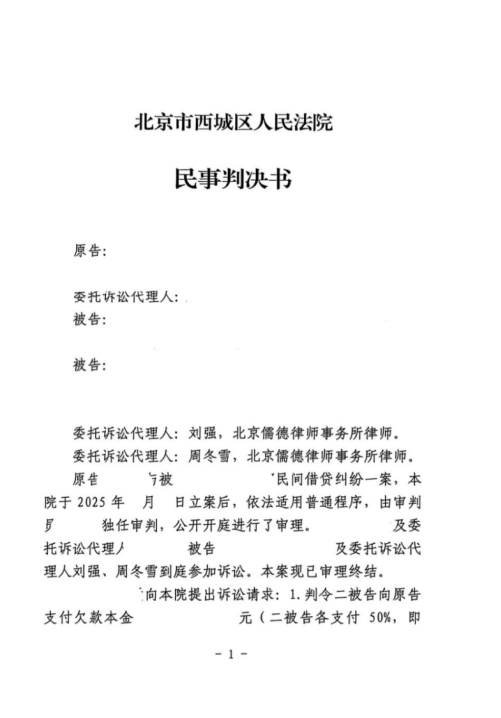
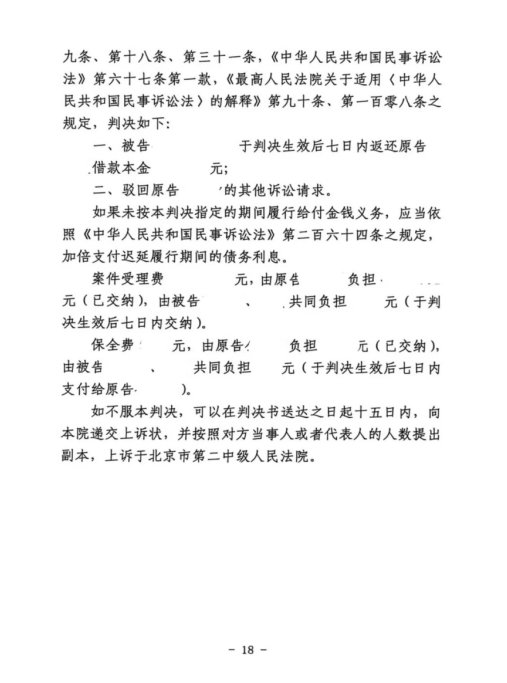
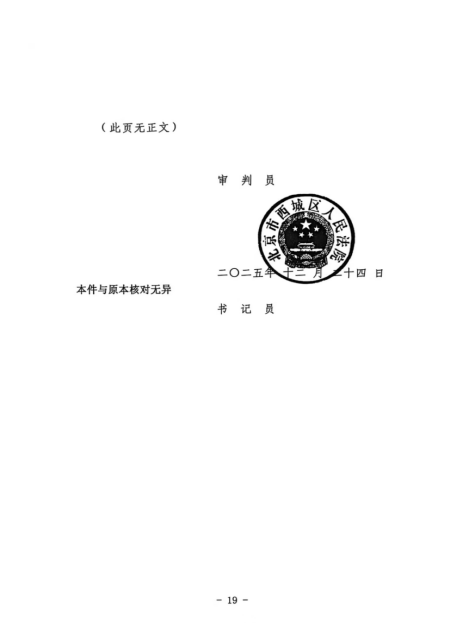
Lawyer's reminder
When handling disputes over relatives' loans and marital joint property after divorce, it is necessary first to determine the authenticity of the loan and whether it constitutes joint debt. Creditors claiming large loans need to provide evidence of the loan agreement, the source of funds, and that the funds were used for the couple's joint living or business activities. Without sufficient evidence, such claims are difficult to support. Property acquired during the marriage without special agreements is generally recognized as marital joint property.
All parties should strengthen their awareness of evidence. Debtors need to provide evidence to contest the loan and joint debt claims and also secure proof of joint property ownership. Creditors need to complete core evidence on the loan and fund flow to avoid losing cases due to evidentiary defects.
When handling such disputes, property preservation measures can be applied simultaneously to prevent asset transfer. Before and after divorce, large financial transactions between relatives should be standardized, the nature of contributions should be clarified and documented in writing, and debt responsibility and property division should be clearly stipulated in the divorce agreement to prevent disputes at the source.